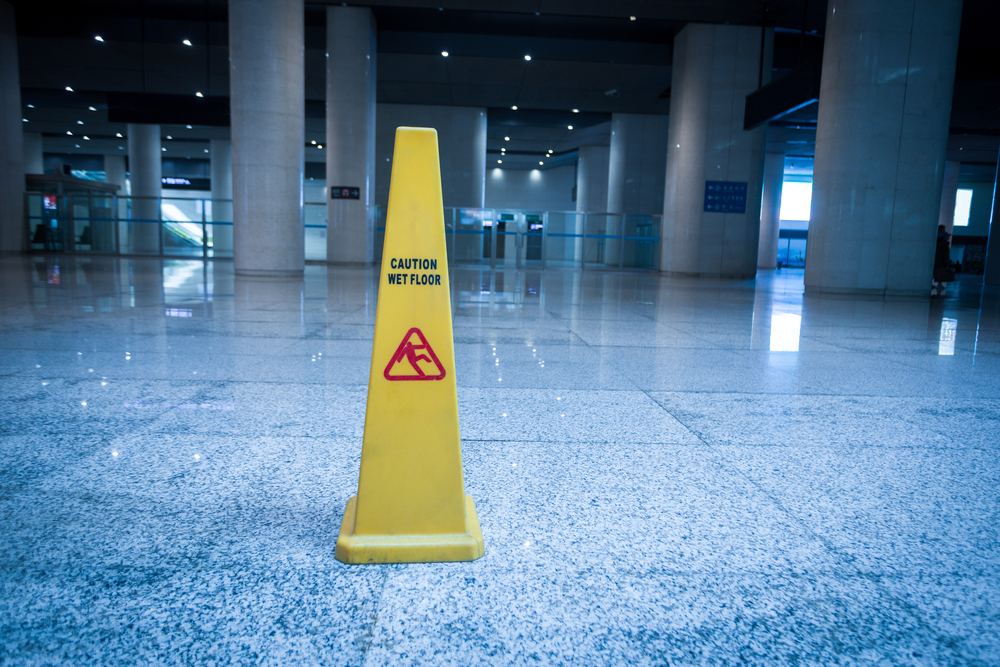
Slip and fall and trip and fall accidents are among the leading causes of injury in the nation. Falls were responsible for over eight and a half million ER visits in a recent year in the US. Similarly, over 800 workers died from falling-related injuries that same year.
The terms slip and fall and trip and fall are often used interchangeably, but there is a subtle yet legally important distinction between the two. How a falling injury occurred can affect the determination of negligence and liability in personal injury cases, so it’s important not to confuse the terms. If you have more questions about the legal distinctions between slip and fall and trip and fall accidents, contact a personal injury attorney.
Understanding Slip and Fall vs Trip and Fall
The main distinction between slipping and tripping accidents is the mechanism that causes the fall. The two types of falls can also cause different types of injuries.
- Slipping accidents happen when a person loses friction with a slippery surface, such as ice or slippery liquid. Because the foot loses traction with the ground, it slips forward, and the body falls backward. Slipping accidents tend to cause head injuries, spinal cord injuries, slipped discs, broken wrists, and sprained ankles.
- Tripping accidents happen when a person’s foot collides with an obstruction while walking, like a cracked sidewalk, floor clutter, or rolled rug. When a person trips, the body’s momentum continues in a forward motion. Tripping accidents can cause facial injuries, broken arms, knee injuries, and foot injuries.
Causes and Examples of Trip and Fall Accidents
Common examples of trip and fall accidents include:
- A houseguest trips over a raised doormat when entering the room.
- A pedestrian loses footing while walking over a cracked section of the sidewalk
- A retail customer trips over electrical cords powering a nearby display
- A hotel guest trips on a step in a poorly lit stairwell.
- A restaurant patron hits their foot on a cracked board on a patio and falls.
Causes and Examples of Slip and Fall Accidents
Below are common examples of slip and fall accidents:
- A grocery store customer slips on wet flooring after mopping.
- A pedestrian slips on ice in a parking lot after getting out of their car.
- A kitchen worker slips on a patch of spilled cooking grease.
- A nursing home resident slips on newly waxed linoleum flooring.
- An event goer slips on the narrow stairs at a sports stadium.
Legal Implications and Responsibilities
There are two main reasons to differentiate between slips, trips, and falls in personal injury cases. The first is consistency. Personal injury law requires accounting for the facts of the case as accurately as possible. Slips and trips have different causal mechanisms, so it’s important that you use the most accurate terminology to avoid confusion or accusations of changing your story.
The second reason has to do with liability. Both slip and fall and trip and fall accidents fall under the broader umbrella of premises liability accidents. If a property owner knows about a hazard and does nothing to fix it or post warnings, they can be liable for injuries to guests. This means that a significant component of these cases is proving that the landowner had knowledge of the hazard that caused the fall.
Causes of slipping accidents are often temporary, making it harder to prove whether the owner was aware of them. For instance, a puddle of water can form and disappear over a short period, so it’s harder to prove that the property owner knew about it. In contrast, the causes of tripping accidents are often static, making it easier to prove the property owner had knowledge of the condition. For example, a cracked sidewalk is something fixed and constant, so it’s less likely that the landowner didn’t know about it.
There may also be differences regarding shared negligence. Slipping hazards are often less readily visible than tripping hazards. For example, clear ice on a sidewalk may be harder to notice at a casual glance than a raised obstruction in a walkway. It might be easier for a landowner to argue that a person was responsible for their own injuries because they failed to notice an obvious tripping hazard.
Immediate Steps to Take After a Slip or Trip and Fall Accident
After a falling accident, you must document the accident and gather evidence to make an insurance claim. Take pictures of your injuries and the accident scene, including the falling hazard. Get the property owner’s insurance and contact information, and ask eyewitnesses if you can take a statement. If available, try to get your hands on video footage of the fall, such as security or CCTV footage.
Next, contact a doctor about your injuries. You will need formal medical documentation if you plan to file a claim. Get copies of any physician’s records, lab reports, imaging results, diagnostic tests, discharge paperwork, and hospital bills. A major reason insurance companies deny claims is a lack of medical evidence, so the more documentation you have, the better.
Next, contact an attorney about filing a claim. An attorney can initiate the next steps and gather additional supporting evidence to prove your injuries and lack of fault. They can also handle negotiations with insurers and represent you in a formal lawsuit if necessary. You only have a limited time to file a falling injury claim, so it’s in your best interest to start as early as possible.
Need a Lawyer? Call Ted A. Greve & Associates Today
Regardless of whether you have injuries from a slip and fall or a trip and fall accident, if you were injured on someone else’s property, you need an attorney who will fight for your rights and interests. Ted A. Greve and Associates have decades of experience fighting for injury victims and have recovered millions for our clients. Your falling injuries deserve recognition, and we can give you a chance to recover financial compensation for your losses.
Contact our attorneys online or call today for a case consultation with a slip and fall accident attorney.